
Frequency Specific Microcurrent to Holistically Manage Hypermobility Spectrum Disorders and Ehlers-Danlos Syndrome in Longmont CO

Hypermobility Spectrum Disorders (HSD) and Ehlers-Danlos Syndrome (EDS) present unique challenges for those affected. These connective tissue conditions often cause chronic pain, joint instability, dysautonomia including Vagus nerve hypofunction, and fatigue. Many patients we see at Resonant Frequency Medicine have never been screened for connective tissue dysfunction, and are surprised to learn that many of their chronic symptoms' root cause ends up being their hypermobile status. Standard treatments often fall short in addressing the complex symptoms, and unfortunately, many medical providers only learned about the extreme presentations of EDS and HSD while in medical training, causing them to overlook more subtle but still impactful presentations clinically. Frequency Specific Microcurrent (FSM) and Frequency Specific PEMF therapy at Resonant Frequency Medicine offer a promising, holistic approach to managing these conditions in Longmont, CO, by targeting the underlying tissue dysfunction and promoting healing.
Evidence Based
There is evidence that microcurrent -- Frequency specific microcurrent in particular -- has novel and impactful influences on tissues. Read the latest case report to learn more, and if you're curious about the research, we've got an entire page dedicated to following the data.

Understanding Hypermobility Spectrum Disorders and Ehlers-Danlos Syndrome
HSD and EDS involve abnormalities in collagen, the protein that provides strength and elasticity to connective tissues. This leads to joints that move beyond the normal range, fragile skin, and other systemic symptoms. Patients often experience:
Joint pain and frequent dislocations
Muscle weakness and fatigue
Digestive issues and autonomic dysfunction
Delayed wound healing
Because these symptoms affect multiple body systems, managing HSD and EDS requires a comprehensive approach that goes beyond symptom relief.
What is Frequency Specific Microcurrent Therapy?

Frequency Specific Microcurrent therapy uses very low-level electrical currents tuned to specific frequencies to stimulate healing in damaged tissues. Unlike traditional electrical stimulation, FSM targets inflammation, scar tissue, nerve pain, and muscle spasms by matching frequencies to the affected tissue type.
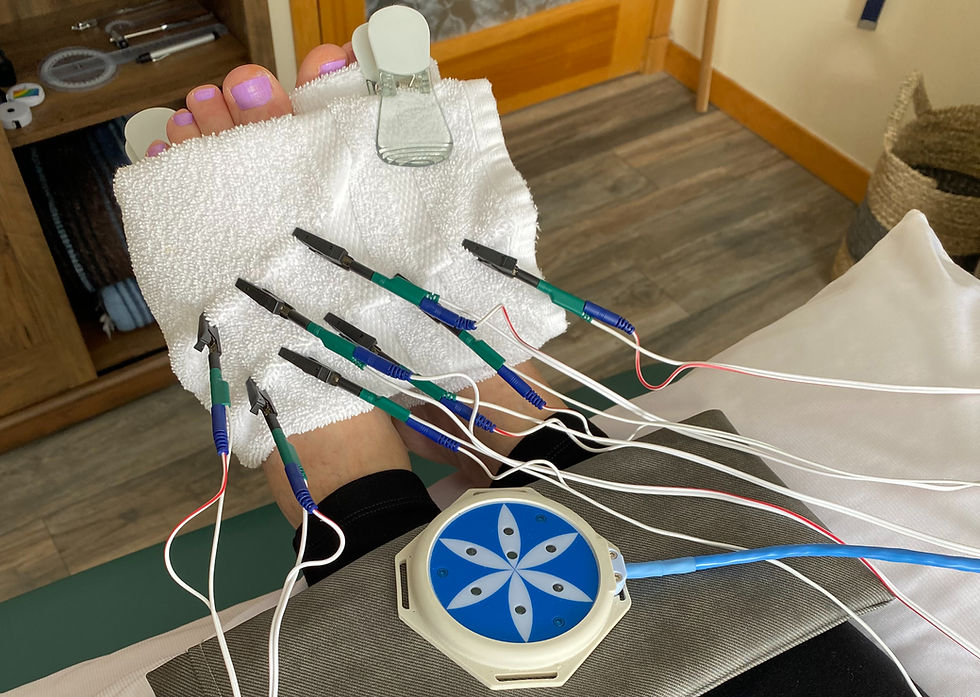
The therapy involves placing electrodes on the skin via either warm moist towels or sticky pads near the painful or injured area. The microcurrent passes through the tissues, encouraging cellular repair and reducing inflammation. Sessions are painless and typically deeply relaxing. Visits at Resonant Frequency Medicine are 90 minutes long and address multiple complaints concurrently. Most of the time patients lay face up or face down on the treatment table, depending on the areas of concern. In some cases, treatment is done sitting or standing, particularly when releasing dural / neural adhesions or tethered cord symptoms, which can be common in the HSD and EDS population.
How FSM Helps Manage HSD and EDS Symptoms
Patients with HSD and EDS often suffer from chronic pain due to joint instability and tissue damage. FSM can address these issues by:
Reducing inflammation: Specific frequencies help calm inflamed tissues, easing pain and swelling.
Promoting tissue repair: Microcurrent stimulates ATP production, the energy source for cells, speeding up healing of ligaments and muscles.
Improving muscle function: FSM can reduce muscle spasms and improve strength around unstable joints.
Enhancing nerve function: Targeted frequencies may help reduce nerve pain and improve sensory feedback.
Restoring Vagal Tone: Clinical findings demonstrate improvements in vagal tone with the use of frequency specific microcurrent programmed to target both the dorsal and ventral Vagus. This improves blood pressure, heart rate, digestion, social engagement, and much more.
For example, at a standard FSM clinic, a patient with frequent shoulder dislocations and chronic pain might receive FSM treatments focused on the shoulder joint and surrounding muscles. As soon as the first session, and after several sessions, they notice less pain, improved joint stability, and better muscle control. At Resonant Frequency Medicine, we stack treatments such that we are addressing the immune system, nervous system, digestive system, and musculoskeletal system with multiple protocols running simultaneously, resulting in a more profound, systems-wide support and broader, more lasting effects of any given treatment session. Sessions are always customized in the moment; there is not a one-size-fits-all approach, rather the treatment is tailored to the patient, with the therapist present throughout the entire 90-minute session. Patients report improvements in anxiety and depression, better digestion, improved heart rate and blood pressure, and of course, less pain and more stability.
Benefits of FSM Compared to Other Treatments
Many patients with HSD and EDS rely on pain medications, physical therapy, or surgery. While these can be helpful, they often do not fully address the underlying tissue dysfunction. FSM offers several advantages:
Non-invasive and drug-free: FSM avoids side effects associated with medications or surgery.
Targets root causes: Instead of just masking pain (like a standard TENS unit does), FSM promotes healing at the cellular level, with measurable increases in ATP production, targeting the collagen, connective tissues, fascia, ligaments, tendons, and nerves.
Fully customizable treatment: Frequencies can be adjusted based on individual symptoms and tissue types.
Complementary to other therapies: FSM can be combined with physical therapy, lifestyle strategies, bracing, KT tape support, nervous system retraining, motor control training, and much more for better outcomes.
What to Expect from FSM Treatments in Longmont, CO
In Resonant Frequency Medicine offers FSM and Frequency Specific PEPMF as part of a holistic treatment plan for HSD and EDS. A typical treatment plan includes:
Initial assessment to identify affected areas and symptoms
Nervous system evaluation and screen
Customized FSM protocols modified and adjusted to target inflamed, damaged, or under-functioning tissues
The option for a Frequency Specific Microcurrent Home Unit to empower patients to self-treat at any time between sessions
Regular follow-ups to monitor progress and adjust / progress frequency protocols and the Plan of Care
Guidance on lifestyle changes, exercise, and nutrition to support healing
Patients often report gradual improvements in pain, joint stability, digestion, nervous system regulation and energy levels after several sessions. Consistency is key, as FSM works best when integrated into a broader care plan.

Practical Tips for Patients Considering FSM
If you live with HSD or EDS and are exploring FSM, keep these points in mind:
Consult your healthcare provider before starting FSM to ensure it fits your overall treatment plan.
Find a qualified practitioner experienced in FSM and connective tissue disorders.
Track your symptoms to notice changes and communicate progress.
Combine FSM with physical therapy and gentle exercises to strengthen muscles, improve posture, and enhance joint stability.
Be patient; healing takes time, and FSM works best with multiple sessions.
What's Better: FSM or PEMF?
The answer: both! That's why we utilize both frequency specific delivery systems in every treatment session.
Moving Forward with Holistic FSM Care for HSD & EDS
The first step is to find a trained FSM Practitioner who specializes in HSD and EDS. You can search for FSM practitioners on Dr. McMakin's website, FrequencySpecific.com.
Look for Certified FSM Practitioners, those who have taken multiple trainings, and those who have presented at the annual Advanced Symposium FSM Conference.
You might cross-reference your FSM Practitioner with the Ehlers Danlos Society website's Practitioner Locator.
The EDS Society's site is worth a bookmark! Loads of helpful information about EDS and HSD.
Set up a consultation and ask explicitly if your practitioner specialize in treating Hypermobility Spectrum Disorders and Ehlers-Danlos Syndrome using FSM.
Look for a practitioner who does not only mention the joint hypermobility and pain relief, but also mentions supporting dysautonomia, optimizing digestion, mitigating EMF toxicity, epigenetic factors, and the myriad aspects present in connective tissue dysfunctions.
Set up an appointment
If it feels like a good fit, go for it!
Arrive well-hydrated with pure water enhanced with all natural electrolytes
Experience the effects for yourself.
Often, patients feel a significant change in pain and stability in just the first visit.
How long treatment effects last is important for you to track, as this information further informs your follow-up schedule and Home Unit prescription when appropriate.
Once you experience what is possible with FSM, you'll be hooked!


Comments